
For the digital detox I was staying with a friend in New York City. I chose to do the detox on my fifth day in the city, since I was in a new environment and this gave me time to get accustomed to the area I was staying in as well as to the transportation I would need to use to get around. I wanted my detox to be intentionally unstructured so in preparation for the day I had a general itinerary. This simply outlined the neighborhoods I wanted to use this day to explore and the trains needed to get me and my friend from place to place.Throughout this experience I did not have my phone on me, all I had was my bag and my wallet. My friend who accompanied me did have her phone on her in case of any emergency and for her own use since she did not participate in the detox with me. This experience and its unstructured approach highlighted to me how deeply I rely on my phone as a buffer against boredom and due to my belief in its efficiency.
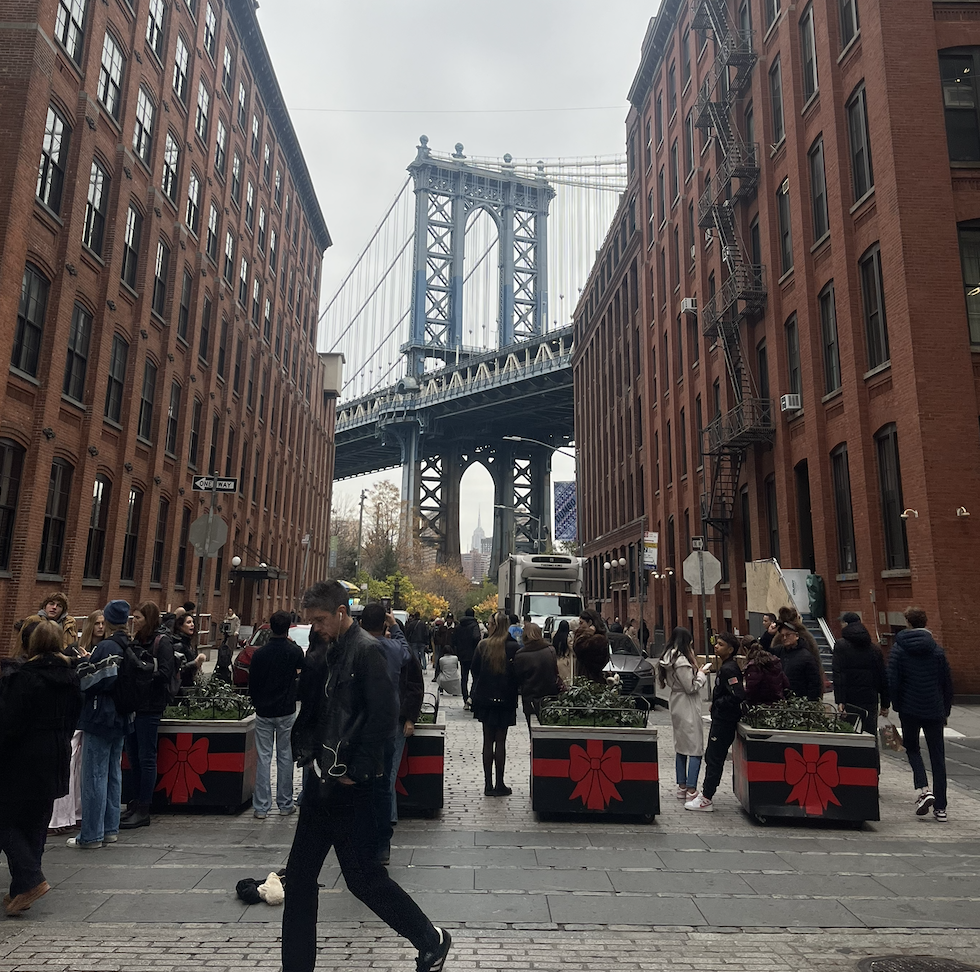
My main replacement activity for the detox was simply walking around the city and exploring without a rigid plan. I purposefully avoided creating a checklist because I wanted to let myself explore freely as opposed to feeling like I needed to reach a specific goal. During the digital detox time I walked across the Brooklyn Bridge, wandered through Chinatown, Little Italy, and SoHo. I allowed myself to walk into stores, try new foods, or do anything that caught my attention. This approach made the day feel like genuine leisure because I was not attempting to produce a specific outcome or maximize the time I was spending in the city. My experience directly aligned with Popova’s (2015) argument that only when people let go of the idea of resting in order to be productive will they be able to experience true leisure. She writes that when we lose this constant work mindset, “…we come to experience life exactly as it unfolds, with its full ebb and flow of dynamism…”(2015) Through this unstructured experience I came to realize that when I travel the places I explore are usually influenced by what people deem popular on social media. Instead of having this expectation to visit certain places, I was able to be present and go wherever my attention led me. I believe that this shift in mindset was present because I did not have access to the influence my phone provides when I do not know what to do. Instead I was able to think for myself and walk around without the need to explore a popular place or get an aesthetic picture that I could post later. This change in my mindset also connects to ideas in the Grind Culture: Productivity Pressures, Social Media, and Burnout podcast episode, which argues that there is a cultural expectation that everything must be purposeful and contribute to our lives, including our leisure.(This Teenage Life, 2024) In letting go of structure and the need to be engaging with my phone, I was able to experience a break from this productivity mindset and enjoy this new place I was visiting.
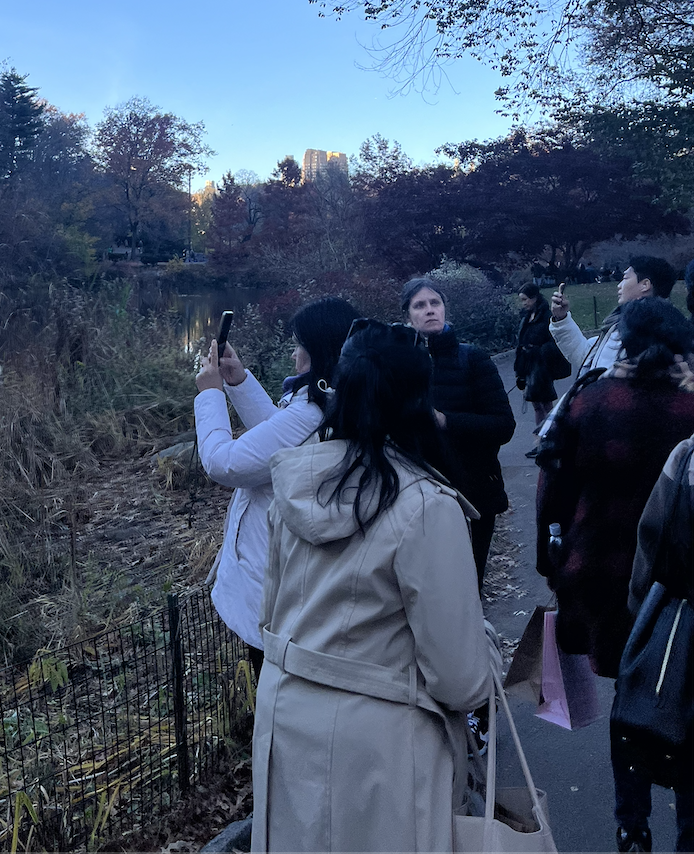
Given that I did not have structured replacement activities, the moments when I felt the detox the most were during periods of downtime, like riding the train, waiting for food or sitting on a bench. These are the moments when I usually instinctively reach for my phone and not having it with me forced me to be more aware of my surroundings. This in turn made me hyperaware of the people around me and their smartphone habits. I noticed that so many people had headphones in, walked with their phones in hand, or were constantly looking down at their phones even when engaging in conversation. My own friend for example would automatically check her notifications whenever our conversation paused in these moments of downtime. These moments exemplified how normalized the concept of phubbing, or ignoring someone to engage in with one’s phone is in everyday life. (Price, 2018) In not having my phone I became aware of just how socially acceptable this behavior has become. Since I myself did not have anything to distract myself with I noticed the soundscape of the city, the view outside the subway train, I overheard people’s conversations, I heard the loud noise of traffic, rain, people’s footsteps. In having these observations I realized how important moments of stillness and downtime are in taking in one’s environment. I noticed that I was able to see and take note of things that I often overlook because I am also one of the people looking down at my phone.
Additionally, setting up my detox in this way allowed me to become aware of all the tasks I habitually place on my phone as well as the main trigger for my phone use. I instinctively rely on my phone for taking pictures, paying for things, checking directions, and occupying my boredom. This aligns strongly with findings from Conroy et al. (2022) who described how smartphone overreliance forms because it becomes a cognitive shortcut that makes tasks feel effortless. My own reliance reflected this perfectly as prior to the detox I believed that getting around without my phone would be a struggle.Yet, when I did the detox I realized how manageable it actually was because as long as I knew the basics of the area there were always other tools to help me get around. I found myself reading the train stop signs, reading street signs and paying attention to the people around me, in ways I would not have, if I was using my phone to guide me. There was a point where me and my friend were not sure if we were heading in the right direction, but we saw a tourist family, who knew where they were headed and we decided to follow them in order to get to our destination. This experience contradicted my belief that my phone is necessary for me to get around, it instead highlighted that it only serves as a distraction from my environment. The detox showed me that while I may think my phone makes things easier, it is simply preventing me from using my own awareness and resourcefulness. Furthemore, in analyzing the detox one of the most important revelations was that boredom is a major trigger for my phone overreliance. I first observed that boredom led to me reaching for my phone automatically in doing the week three noticing activity from How to Break Up With Your Phone. (Price, 2018) This trigger became even more evident as I am now analyzing my detox experience. During my detox I did not have long periods of stillness, as I had constant stimulation, since I was sightseeing, walking, and doing things that naturally stopped me from wanting to check or have my phone. Throughout this experience I was constantly moving and exploring, I never reached the point of boredom that usually triggers my phone use. I feel that if I had tried the detox on a regular day at home, it would have been much harder. In solidifying this as my main trigger it was helpful to understand what has caused my automated use of my phone in my daily life. My reliance on my phone is not simply present because of convenience but also due to me wanting to avoid moments of inactivity. I believe that I am uncomfortable with moments of inactivity because it feels as though I am not using my time to its fullest potential. In thinking in this way I am ignoring the reflection, creativity and internal processing that these moments of stillness allow for. In considering this experience I have learned that in order to make a change in my habits I have to let go of this mindset that stillness equals unproductivity.
Overall, my unstructured digital detox allowed me to experience the city in a more explorative and observant way. It revealed to me how normalized other peoples phone habits are as well as why I instinctively gravitate toward using my own phone. One being that I believed it made me more efficient and the other being that it allowed me to fill moments of stillness which tend to make me uncomfortable. Through being more aware, I realized how my dependence on my phone has limited my autonomy and ability to feel comfortable in moments of work free time. One takeaway I hope to incorporate moving forward is being more intentional about when I do not use my phone and making myself more comfortable with downtime that does not require me to do anything. I need to practice being more self reliant and comfortable with being inactive.
Works Cited
Conroy, D., Chadwick, D., Fullwood, C., & Lloyd, J. (2022, September 1). “You have to Know how to live with it without getting to the addiction part”: British Young Adult Experiences of Smartphone Overreliance and Disconnectivity. Psychology of Popular Media. Advance online publication. http://dx.doi.org/10.1037/ppm0000425
Popova, M. (2015). Leisure, the basis of culture: An obscure German philosopher’s timely 1948 manifesto for reclaiming our human dignity in a culture of workaholism. https://www.themarginalian.org/2015/08/10/leisure-the-basis-of-culture-josef-pieper/
Price, C. (2018) How to break up with your phone: The 30- day plan to take back your life. Ten Speed Press
This Teenage Life. (2024). Grind Culture: Productivity pressures, social media, and burnout [Audio podcast episode]. In This Teenage Life, https://www.thisteenagelife.org/episodes/Grind_Culture%3A_Productivity_Pressures%2C_Social_Media%2C_and_Burnout

My Journey
Continue exploring my site!